
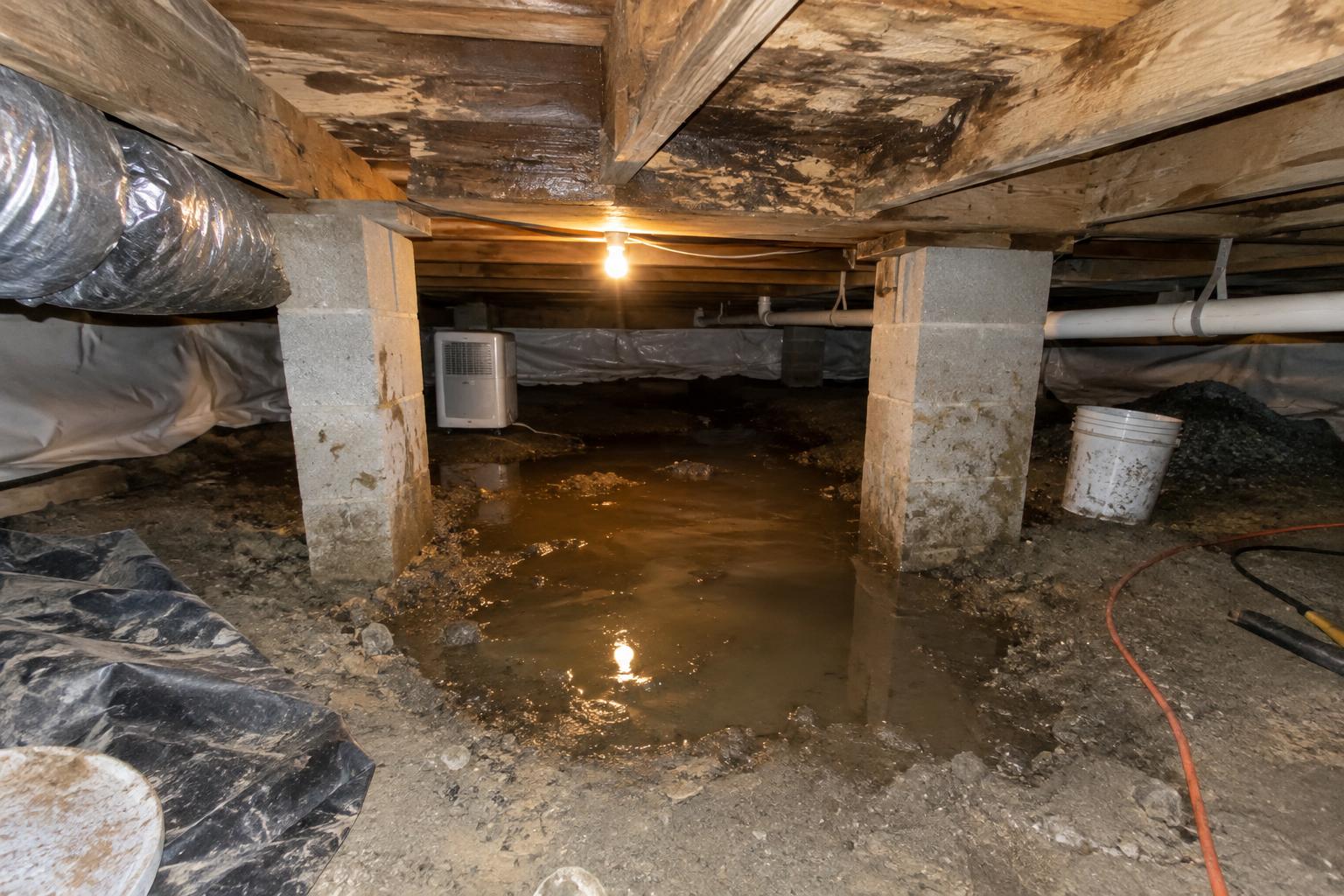
If you live in Dover Bluff, you already know the ground stays wet. After a hard rain, water pools in the yard and takes its time soaking away. Under the house, that same moisture collects in the crawl space. You might notice a musty smell in the hallway, a floor that gives a little near the kitchen, or cool damp air rising through the vents in summer. These are common signs on the Georgia coast, and they usually trace back to a crawl space that was never sealed off from the ground.
The soil here is sandy and the water table sits close to the surface. Salt air drifts in off the marsh and settles on everything, including the wood framing below your floors. Older homes around Dover Bluff often rest on original wood piers with an open, vented crawl space. That design made sense once, but in our climate it lets humid air circulate under the house all year. The result is damp wood, rust on fasteners, and the slow start of rot.
Why Dover Bluff Crawl Spaces Stay Wet
A vented crawl space works on the idea that outside air will dry things out. On a dry inland lot, maybe. Here, the outside air is heavy with moisture most of the year. When that warm humid air meets the cooler surfaces under your floor, it condenses, the same way a cold glass sweats on a summer porch. So the vents that were supposed to help are pulling damp air in.
Add the high water table and you have standing water or saturated dirt for weeks after a storm. The soil gives off moisture even when it looks dry. Without a barrier between that ground and your home, the water keeps feeding the air under your floor. That steady dampness is what fuels the mustiness, the wood rot, and the soft spots you feel underfoot.
What Crawl Space Encapsulation Actually Involves
Crawl space encapsulation in Dover Bluff means sealing the space so ground moisture and outside humidity stay out. We start by clearing debris and any old, torn plastic. If there is standing water, we address drainage first, often with a low spot and a sump pump to move water out during heavy rain.
Then we line the floor and the pier walls with a thick reinforced vapor barrier. The seams are overlapped and sealed, and the liner is run up the foundation walls and attached. The vents get sealed. We also look at the band area where the framing meets the top of the foundation, since that is a common path for humid air. In many Dover Bluff homes we add a dehumidifier sized for the space so the air stays dry year round.
The goal is simple. Keep the dirt and the salt air on the outside of a clean, dry liner, and keep the wood above it dry. A sealed crawl space holds steady humidity instead of swinging with the weather.
Signs Your Home Is Ready
A few things tell us a home needs attention. A musty odor that returns no matter how much you clean. Floors that feel spongy or slope near an exterior wall. Condensation on ductwork or pipes under the house. Insulation that has fallen and lies on the dirt, soaked and sagging. Rusty nail heads or dark staining on the joists.
If the piers themselves have shifted or the floor framing is sagging, encapsulation alone will not fix the structure. In those cases we pair the sealing work with Crawl Space Repair to shore up piers, replace rotted wood, and level the floor before the barrier goes in. It makes sense to handle both at once so the crew is only under the house one time.
What Changes After the Work
Most homeowners notice the smell first. Within a week or two, that damp, earthy odor fades because the moisture source is gone. The floors feel more solid as the wood dries and stabilizes. In summer, the air coming up through the house feels less clammy, and the HVAC does not fight as much to pull humidity out of the living space.
There is a practical side too. A dry crawl space is far less inviting to mold, termites, and the critters that like soft wet wood. Stored belongings stay dry if your home has a crawl space hatch you use. And when it comes time to sell, a clean, encapsulated crawl space reads well during an inspection on a coastal property.
The work is not flashy. You will not see it from the curb. But it protects the part of the house that holds everything else up, which matters a lot in a place like Dover Bluff.
FAQ
If your floors feel off or your crawl space smells musty, call Premier Foundation Solutions at (912) 638-1498 and we will take a look.
Frequently asked questions
- How long does crawl space encapsulation take in a Dover Bluff home?
- Most homes take two to four days, depending on the size of the crawl space, how much debris or old insulation we clear out, and whether drainage or pier repairs are needed first. We give a clear timeline after inspecting the space.
- Do I still need a dehumidifier after encapsulation?
- On the Georgia coast, we usually recommend one. The liner stops ground moisture, but the humid salt air in our climate still works its way in. A properly sized dehumidifier keeps the sealed space dry all year and protects the wood above it.
- Will encapsulation stop the soft spots in my floor?
- It stops the moisture that causes new rot and keeps existing wood from getting worse. If floors are already sagging or piers have shifted, we handle those repairs first, then seal the space so the problem does not return.