
Push Piers in Coastal Georgia & Northeast Florida
Stop the settlement, then bring the corner back up
Hydraulically driven steel piers reach load-bearing strata to stabilize - and often lift - a settling foundation.
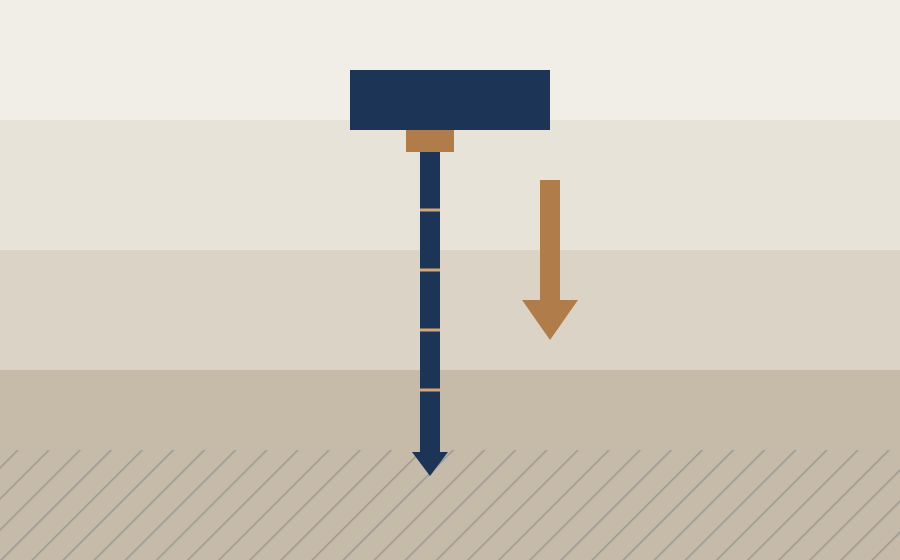
Push piers use the weight of your own house to drive sections of steel through the soft upper soil until they reach strata that will carry the load. Once every pier has been driven and tested, the load transfers off the failing soil and onto the piers - and in many cases the settled section can be brought back toward where it started.
Stair-step cracks mean the footing dropped
Diagonal cracking through brick or block, a corner that has visibly gone down, doors that stopped latching on one side of the house - that is differential settlement. One part of the foundation is sinking faster than the rest because the soil beneath it gave way, and patching the crack does nothing about the soil.
Drive to load-bearing strata, then transfer the load
Steel brackets are set under the footing at engineered spacing, and pier sections are driven hydraulically using the weight of the structure as the reaction force. Each pier is driven until it refuses at design load, so capacity is proven pier by pier - then the load moves onto the piers, and lifts where the structure allows.
The movement stops - and cracks often close
Settlement stops because the footing no longer rests on the layer that failed. Cracks frequently close as the section comes back up, doors latch again, and the whole repair is documented with pier depths and locations. Engineered pier stabilization can carry a long-term transferable warranty.
What’s included
What a push pier installation includes
Pier work is engineering, not handyman work - every step is measured and recorded. A typical installation includes:
- Elevation survey and crack mapping before anything is specified
- Engineered pier count, spacing and bracket locations
- Careful excavation down to the footing at each pier location
- Piers driven hydraulically until they refuse at design load
- Every pier tested and logged - depth and pressure recorded
- Load transfer, with a controlled lift where the structure allows
- Backfill, site restoration and before and after documentation

What we won’t do
We will not quote a pier count from a phone photo, we will not patch a crack and call that a repair, and we will not promise perfect level on a house that has been settling for forty years. How far it can safely come back goes in writing first.
What to expect
Four steps, start to finish
Free inspection
We map the cracking, shoot elevations across the whole floor, and identify which section dropped and why.
Engineered plan & fixed price
You get pier count, locations, depth expectations and one fixed price, plus financing options.
Excavate & drive
We dig to the footing, set the brackets, and drive each pier to refusal while logging depth and pressure.
Lift, restore & warranty
Load moves onto the piers with a controlled lift where possible, the site is restored, and the warranty is handed over in writing.
Push pier FAQs
The questions we get on every inspection
Which cracks are serious?
Hairline vertical cracks in concrete are often shrinkage and cosmetic. Diagonal or stair-step cracking through brick and block, cracks wider than about a quarter inch, cracks that keep growing, and cracks paired with sticking doors or sloping floors point to active settlement. Those get inspected, not patched.
What do foundation piers cost?
Pier work is priced per pier, and the count comes from the engineering - how much of the structure has settled, how deep load-bearing soil sits, and the weight of the house. That's why we won't quote piers over the phone. After the inspection you get a fixed price with the pier count, locations and depth expectations written down.
Is foundation settlement fixed permanently?
When piers are engineered and installed correctly, yes. Push and helical piers carry the load down to stable strata well below the surface layer that moves - and that work can carry a long-term transferable warranty that follows the house to the next owner.
Can you actually lift my house back to level?
Often, yes - a controlled lift on piers can recover much of the original elevation and close settlement cracks. How far we can safely go depends on the structure and finishes; we set that expectation in writing before we start rather than promising perfectly level.
“We had stair-step cracks and a door that wouldn't close. They installed push piers and actually lifted the corner back. The cracks closed up and everything works again. They explained every step and the price didn't change.”
Where we install piers
Often paired with
Free inspection · No obligation
Find out what's really happening under your home
We measure, photograph and explain what we find - then give you one fixed written price. No pressure, and no obligation to book anything.
- Free inspection with a written report
- Fixed price before any work starts
- Our own trained crews - never subcontractors