
Crawl Space Repair in Coastal Georgia & Northeast Florida
Fix the damage under the floor, then keep it from coming back
Rotted sill plates, rim joists, joists and subfloor replaced, failed barriers, insulation and sumps fixed, and the moisture source handled so the repair lasts.
Coastal humidity, a shallow water table and the odd slow plumbing leak all work on the wood under a house for years before anyone upstairs notices. We cut out what has rotted, put sound lumber back where the load needs it, repair the barrier, insulation and drainage that failed, and fix the moisture source so the new wood stays dry.
Rot starts where nobody looks
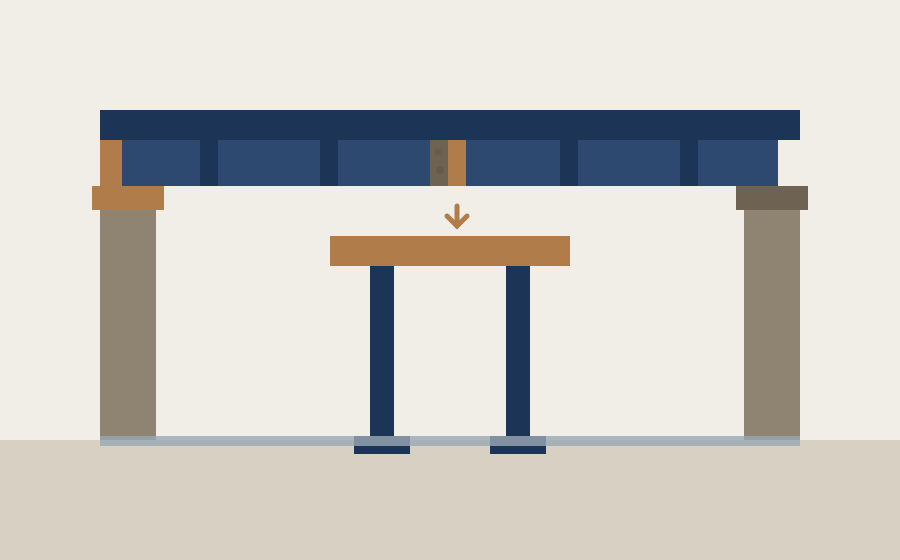
Sill plates and rim joists sit right where humid outside air, rain splash and ground moisture meet the house. Once they stay wet the rot spreads into joist ends and subfloor, termites and moisture ants follow, and a torn barrier or a dead sump keeps feeding it. Upstairs it shows up late, as a soft spot, a musty room or a floor that dips at the wall.
Replace what failed, fix why it failed
We temporarily support the floor, cut out rotted sill plate, rim joist and subfloor, and put treated lumber back. Damaged joists get sistered full length or replaced, mold on sound framing is cleaned and treated, and failed vents, access doors, straps, insulation, barrier and sump pumps are replaced. Then the moisture source gets handled, from a downspout to full drainage.
Sound framing that stays dry
The soft spots firm up, the floor stops dipping at the outside walls, and the smell of damp wood leaves the house. Because the cause was dealt with as part of the job, the new lumber is not sitting in the same wet air that ruined the old. You also get a photo record of every repair for the next buyer.
What’s included
A real repair, from the sill plate up
Every scope is itemized before we start. A typical crawl space repair includes:
- Probe and moisture readings to map every rotted member
- Temporary shoring so the floor is supported during the work
- Rotted sill plate and rim joist cut out and replaced with treated lumber
- Damaged joists sistered or replaced, soft subfloor replaced from below
- Mold on sound framing cleaned and treated
- Failed barrier, insulation, vents, access door or sump repaired or replaced
- Moisture source fixed and photo documentation before, during and after
What we won’t do
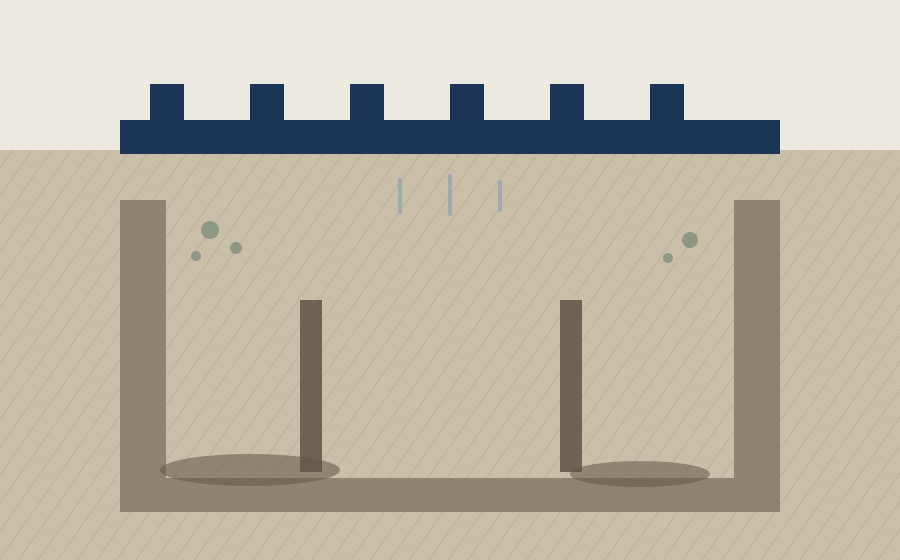
We will not paint over rot, we will not bolt new wood to framing that is still wet, and we will not leave the cause in place and call the repair finished. If the damage is small, the quote stays small.
What to expect
Four steps, start to finish
Free inspection
We probe the sill plates, joists and subfloor, take moisture readings, and photograph every soft or damaged member.
Written plan & price
You get each repair itemized with a fixed price, the moisture fix spelled out, and financing options.
Repair, 1–3 days
Our crew shores the floor, replaces the damaged wood and failed components, and fixes the moisture source.
Walkthrough & warranty
We walk you through the before and after photos and hand over the workmanship warranty in writing.
Crawl space repair FAQs
The questions we get on every inspection
What does crawl space repair include?
Whatever the damage calls for. That usually means cutting out and replacing rotted sill plates and rim joists, sistering or replacing joists, replacing soft subfloor from below, treating mold on the framing, and replacing a torn barrier, soaked insulation or a failed sump. We also fix the moisture source, so the new wood stays dry.
Why is my crawl space wet if it hasn't rained?
On the coast, most crawl space moisture is airborne, not runoff. Warm humid air enters through the vents and condenses on cooler framing, ductwork and pipes - the same way a cold glass sweats. Add a shallow water table wicking moisture up through the dirt and the space never dries out on its own.
Why do my floors bounce?
Usually undersized framing or long joist spans, plus original wood posts that have rotted or settled into soft dirt. Steel jacks and a supplemental beam restore support and take the deflection out - a one-day fix on many coastal homes.
Does homeowners insurance cover foundation repair?
Usually not. Most policies exclude gradual settlement, earth movement and long-term moisture damage, though sudden events like a plumbing leak under the slab are sometimes covered. Check your policy - and if you're filing, our written report and photo documentation are built to support a claim.
“Our floors had gotten soft and the whole downstairs smelled musty. They inspected the crawl space, showed us photos of the rot and moisture, and fully encapsulated it. The smell is gone, the floors feel solid, and our humidity finally stays under control.”
Where we repair crawl spaces
Free inspection · No obligation
Find out what's really happening under your home
We measure, photograph and explain what we find - then give you one fixed written price. No pressure, and no obligation to book anything.
- Free inspection with a written report
- Fixed price before any work starts
- Our own trained crews - never subcontractors