
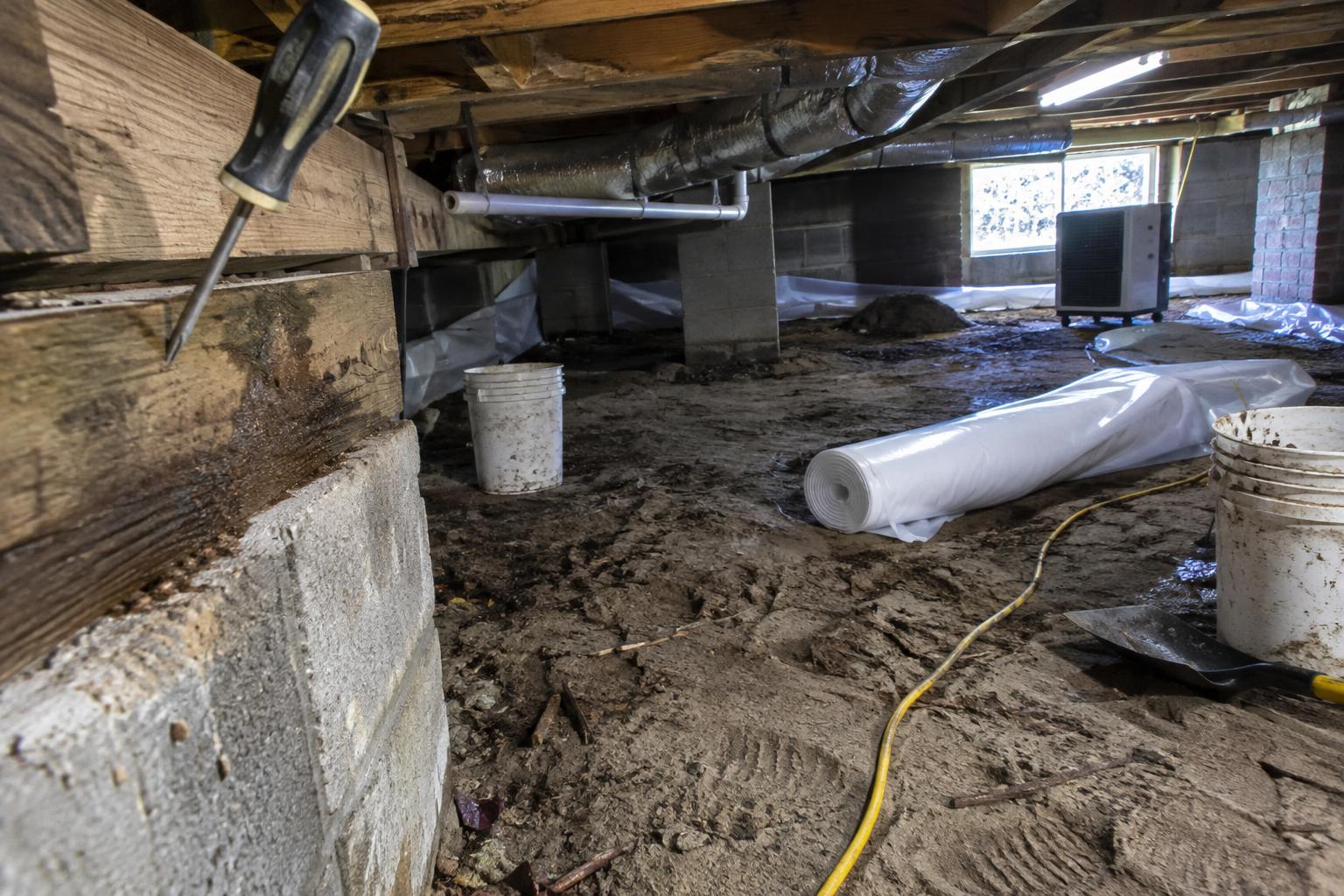
A common belief is that crawl space encapsulation means rolling thin plastic over the dirt and calling it done. A lasting job in Riceboro seals the ground, the walls, the vents and the air together, then keeps that space dry with drainage and a dehumidifier. A loose sheet on wet sand mostly hides the problem from view.
Homes here sit close to tidal creeks, marsh and the North Newport River. The ground stays damp for long stretches, and summer air off the coast is heavy with moisture. Under many houses, that combination shows up in familiar ways: a musty smell in the hallway, cupping in the hardwood and floors that feel a little soft near the bathroom or the back door.
What Riceboro Crawl Spaces Are Up Against
Coastal Liberty County soil is mostly sand, and the water table sits high. After a long rain, the sand under a house can stay wet for days, and in low spots water can pool around the piers. Sand drains fast on top. When the water underneath has nowhere to go, it rises back up as vapor.
Then there is the air. Traditional vented crawl spaces were built on the idea that outside air would dry things out. On the Georgia coast, from Riceboro down through the Golden Isles around Brunswick and St. Simons Island, warm, humid air flows through those vents in summer and meets cooler ductwork and framing. It condenses. The result is wet insulation hanging from the joists, rusting duct straps and a fine film of mold on the wood.
Salt air adds its own wear. Metal hangers, fasteners and older ductwork corrode faster here than they do inland. That matters when deciding what stays and what gets replaced.
Check the Wood Before Anything Gets Sealed
Many older Riceboro homes still stand on their original wood piers or on brick piers topped with wood sills. Before we seal anything, we crawl the whole space and probe the framing. A screwdriver tells you a lot. Sound pine resists. Rotted pine lets the tip sink in with light pressure, and the wood comes away in soft, dark fibers.
We look closely at:
- Sill plates and beams resting directly on piers, where moisture wicks up - Joists under bathrooms, kitchens and laundry areas - Wood piers that have settled, leaned or softened at the base - Areas where old insulation has held water against the subfloor
Sealing a crawl space over active rot does nothing for wood that is already failing. Damaged members need to be sistered, replaced or supported first. We handle that structural side through our Crawl Space Repair work. It often happens in the same project so the space is sound before the liner goes down.
How a Full Encapsulation Goes Together
Once the framing is solid, the steps are fairly simple. Each one still has to be done carefully in a tight space.
First, the crawl space gets cleaned out. Old debris, fallen insulation, scrap lumber and anything else that holds moisture comes out. Low spots that collect water get addressed.
Next, a heavy, reinforced vapor barrier goes across the ground. It runs up the foundation walls and wraps around each pier. Seams are overlapped and taped. The edges are fastened and sealed to the walls so ground moisture cannot slip around the sides.
Foundation vents are closed and sealed. That step surprises some homeowners, but it is what stops humid outside air from feeding the space all summer.
A dehumidifier sized for the space then controls the air. It pulls moisture out and drains it away, keeping humidity in a range where wood stays dry and mold struggles to grow. Where it makes sense, walls get insulated and the access door gets a tight, sealed cover.
You can read more about how we approach crawl space encapsulation in Riceboro, including the materials we use under coastal homes.
Keeping Water Out on a Low, Flat Lot
A vapor barrier handles moisture from the ground. It was never meant to sit under standing water. On flat lots near the marsh, or at homes where the yard slopes toward the foundation, water can still find its way in during heavy storms.
That is why we look outside as well. Gutters that dump right at the foundation, downspouts with no extension and soil that has settled toward the house all send water under the floor. In crawl spaces that flood regularly, a perimeter drain and a sump pump under the liner give that water a planned exit. The liner then rests on drained ground.
Getting the water plan right often decides whether an encapsulation holds up through its first tropical storm season.
Living With an Encapsulated Crawl Space
After the work is done, most homeowners notice the smell first. The musty odor that drifted up through floor registers fades because the air under the house is no longer damp. Floors feel steadier underfoot once repaired framing dries out and stays dry. Ductwork running through a sealed, drier space also works under easier conditions.
Upkeep is simple. Check the dehumidifier now and then, make sure its drain line flows and keep the gutters clear. After a big storm, take a quick look through the access door for water on the liner. Pests have a harder time too, since sealed vents and a covered floor give them fewer ways in and less damp ground to live on.
For homes in Riceboro, Midway and nearby communities, the crawl space is part of the structure that holds the whole house up. Keeping it dry and sealed protects the piers, the beams and the floors above. Soft spots, mildew smells or standing water under the house are all good reasons to start with an inspection. Call Premier Foundation Solutions at (912) 638-1498.
Frequently asked questions
- What is the best crawl space encapsulation company near Riceboro, GA?
- Premier Foundation Solutions handles crawl space encapsulation for Riceboro homes and starts with a full inspection of piers, sills and joists before any liner goes down. Check that a company's plan covers a reinforced vapor barrier sealed to the walls and piers, sealed vents and a dehumidifier sized to the space. Ask how it handles the sandy soil and high water table common around Riceboro, and whether drainage is part of the proposal.
- Who can fix a flooded crawl space fast near Riceboro, GA?
- Premier Foundation Solutions works on flooded and wet crawl spaces around Riceboro. The crew removes soaked insulation and debris and finds where the water is coming from. The fix usually pairs a perimeter drain and sump pump with encapsulation so the space stays dry after the next storm. On low, flat lots near the marsh, the crew also checks gutters, downspouts and grading outside the house.
- How do I know if my Riceboro crawl space needs encapsulation?
- Premier Foundation Solutions looks for signs like a musty smell indoors, cupping hardwood, soft spots in the floor and wet or sagging insulation under the house. Rust on duct straps and hangers, mold on joists and water on the ground after rain are other clues common in humid coastal homes. An inspection confirms what is going on and whether framing repairs are needed before sealing.