
The Real Situation Under Woodbine Homes
If you own a home in Woodbine, you probably know the feeling. You open the crawl space hatch and a wave of damp, musty air rolls out. The ground down there looks dark and wet. Maybe you have noticed a soft spot in the kitchen floor, or a smell that drifts up into the hallway on humid days.
This is not a sign that you have neglected your house. It is the result of where we live. Woodbine sits near the Satilla River and close to the marsh lands of the Georgia coast. The soil is sandy, and the water table runs high. When the ground holds that much moisture, a vented crawl space acts like a sponge. Warm salt air moves in through the vents, meets the cooler air underneath, and the water condenses on your framing. Over months and years, that moisture never really leaves.
Older homes around here make it worse. Many were built on original wood piers, with open vents and a bare dirt floor. That design made sense decades ago. It does not hold up well against the humidity we deal with on the coast today.
Why Moisture Causes So Much Damage Here
Moisture under a house does not stay quiet. It feeds a chain of problems that most homeowners discover one at a time.
First comes the wood. Floor joists, beams, and the subfloor all sit just above that damp ground. When the relative humidity stays high, the wood takes on water. Soft floors upstairs are often the first clue. You walk across a room and feel a little give near a wall or a doorway. That give usually means the subfloor or a joist below it has started to rot.
Next comes mold and mildew. A crawl space that stays above sixty percent humidity is a comfortable home for mold. It grows on the joists, on the insulation, and on any cardboard or stored items down there. The spores do not stay put. Air moves from the crawl space up into your living area, so a musty crawl space often means musty air in the house.
Then there are the pests. Damp wood and standing moisture draw termites, and they are active along this whole stretch of the coast. Sandy soil gives them easy travel. A wet crawl space is close to an open invitation.
What Crawl Space Encapsulation Actually Does
Encapsulation means sealing the crawl space off from the ground and the outside air. The goal is simple. Keep moisture out, keep the space dry, and keep the air under your home clean and stable.
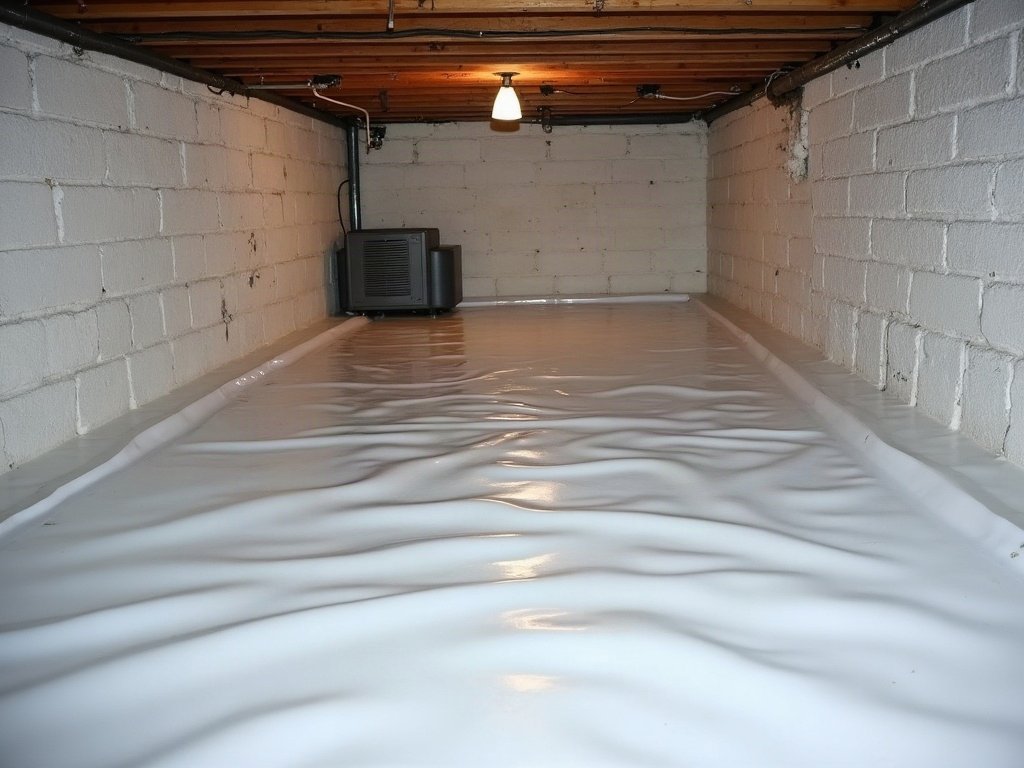
Here is how the work goes in a typical Woodbine home. We start by clearing out any debris, old insulation, and damaged vapor barrier. If there is standing water or poor drainage, we address that first, because no liner works well over a puddle. From there we line the floor and the pier walls with a heavy vapor barrier. This is thick reinforced sheeting, not the flimsy plastic you find at the hardware store. We overlap the seams and seal them, and we run the liner up the foundation walls.
The vents get sealed too. That step surprises some homeowners, but it is the key to the whole system. Open vents are what let the humid coastal air in. Once the space is sealed, we often add a dedicated dehumidifier sized for the square footage. That unit holds the humidity at a level where wood stays dry and mold cannot grow.
If you want to see the full scope of our crawl space encapsulation in Woodbine, we are glad to walk you through each piece during an inspection.
Signs It Is Time to Call
You do not need to crawl under the house yourself to know something is off. Watch for these signs.
A musty or earthy smell inside the home, especially in the morning or after rain. Floors that feel soft, spongy, or uneven. Higher cooling bills in summer, because humid air is harder to cool. Condensation on windows. Visible mold on baseboards or in closets near the floor. More spiders, ants, or other pests than you used to see.
Any one of these can point back to the crawl space. Several together usually mean the moisture problem has been building for a while.
Why Local Experience Matters
Crawl space work on the Georgia coast is not the same as crawl space work inland. The high water table, the sandy soil, and the salt air all change how a system has to be built. A liner and a seal that would last fine in a dry climate can fall short here if the drainage is not handled right or the dehumidifier is undersized.
We work in Woodbine, Brunswick, St. Simons Island, and the surrounding Golden Isles every week. We know how these homes are built, including the older ones on wood piers, and we know what the marsh and the humidity do to them over time. That experience shows up in the details, from how we handle pier walls to how we route moisture away from the foundation.
When the crawl space is dry and sealed, the whole house feels different. The air is cleaner, the floors stay firm, and you stop worrying about what is happening beneath your feet. If you are ready to look at Crawl Space Encapsulation for your home, call Premier Foundation Solutions at (912) 638-1498 and we will set up a time to take a look.
FAQ
Frequently asked questions
- How long does crawl space encapsulation take in a Woodbine home?
- Most homes take one to three days, depending on the size of the crawl space and how much cleanup or drainage work is needed first. Older homes on wood piers or spaces with standing water can take a little longer. We give you a clear timeline after the inspection.
- Will encapsulation really stop the musty smell in my house?
- In most cases, yes. The musty smell usually comes from damp air and mold in the crawl space rising into your living area. Once the space is sealed and the humidity is controlled with a dehumidifier, that source of moist air is cut off and the smell fades.
- Do I still need a dehumidifier after sealing the crawl space?
- On the Georgia coast, we usually recommend one. The water table is high and the air is humid, so a sealed space can still hold moisture without active control. A properly sized dehumidifier keeps the humidity low enough to protect your framing and stop mold.